Food packaging is the final stage of the modern food industry. It plays an important role in protecting, promoting, and facilitating the storage, transportation, and sale of food. To a certain extent, it has a direct or indirect impact on food quality, which not only endangers the health of consumers but also affects the healthy development of my country’s entire food packaging industry and even the food industry as a whole. Food packaging is closely linked to food safety. Food packaging must ensure the hygiene and safety of packaged food. Currently, the food containers and packaging materials permitted for use in my country can be categorized as follows: plastic products; natural and synthetic rubber products; ceramic and enamel containers; aluminum, stainless steel, and iron containers; glass containers; food-grade paper; composite film and composite film bags; bamboo and wood; cotton and linen; and others.
Safety Analysis of Food Packaging Materials
Plastic
Plastic is a polymer material consisting of high-molecular-weight polymer resin as its base component, to which various additives are then added to improve its performance. As a rising star in the field of packaging materials, plastic packaging has become the fastest-growing packaging material in the world over the past 40 years, thanks to its abundant raw materials, low cost, excellent performance, light weight, and attractive appearance. The migration and leaching of toxic and harmful substances remaining in plastic packaging lead to food contamination, primarily in the following ways.
Toxicity of the resin itself
The unpolymerized free monomers, cracking products (vinyl chloride, styrene, phenols, nitrile rubber, formaldehyde), degradation products, and toxic substances that form as a result of aging in the resin all affect food safety. The U.S. Food and Drug Administration (FDA) has pointed out that it is not polyvinyl chloride (PVC) itself, but the vinyl chloride (VCM) that remains in PVC, that can cause cancer after oral ingestion, and therefore prohibits the use of PVC products as food packaging materials. The free monomer vinyl chloride (VCM) from polyvinyl chloride has an anesthetic effect and can cause constriction of blood vessels in the limbs and pain. It also has carcinogenic and teratogenic effects. It forms vinyl chloride oxide in the liver, which has a strong alkylating effect and can bind to DNA to form tumors [1]. Residual substances in polystyrene, such as styrene, ethylbenzene, toluene, and isopropylbenzene, pose a threat to food safety. Styrene can inhibit reproduction in rats and reduce the weight of the liver and kidneys. Low-molecular-weight polyethylene dissolves in oils and fats and produces a waxy odor, which affects product quality. The extent to which these harmful substances affect food safety depends on their concentration in the material, the density of the compound, the nature of the food that comes into contact with the material, the duration of contact, the temperature, and their solubility in the food.
Surface Contamination from Plastic Packaging
Because plastics accumulate dirt quickly, they easily absorb dust, dirt, and microorganisms, which can contaminate food.
Toxicity of additives such as stabilizers, plasticizers, and colorants that are added during the manufacturing process of plastic products
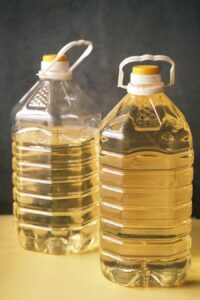
A scientific study conducted by Professor Li Shuguang of the Basic Medical College of Tongji University and his research team showed that plasticizer contamination in food in my country is widespread. The study found that nearly all brands of plastic barrels of cooking oil contain two plasticizers, “dibutyl phthalate (DBP)” and “dioctyl phthalate (DOP),” while iron barrels of cooking oil contain almost none. .
Food contamination caused by a large number of toxic additives, heavy metals, pigments, viruses, etc., in illegally used recycled plastics
Recycling and reusing plastic materials is the prevailing trend. Due to the complexity of recycling channels, harmful substances often remain in recycling bins, making it difficult to ensure thorough cleaning and processing. To mask the quality defects in recycled products, some manufacturers often add large amounts of dye, resulting in significant residues of dye pigments and food contamination. For legal reasons, even large quantities of medical waste plastic are recycled, posing a hidden threat to food safety.
Ink Spills
The main components of ink are pigments, resins, additives, and solvents. Ink manufacturers often consider the impact of resins and additives on safety but overlook the indirect harm that pigments and solvents cause to food safety. Some inks contain additives, such as siloxanes, to improve adhesion. At certain drying temperatures, these substances cause the group to break down and generate compounds such as methanol, which are harmful to the human nervous system. The ink printed on plastic food packaging has a greater impact on food safety because some toxic substances, such as benzene, do not evaporate easily. In recent years, the pass rate for plastic food packaging at various testing sites has generally been low, ranging from 50% to 60%. The main reasons for non-compliance include excessive benzene residues, etc. The primary cause of excessive benzene concentrations is the use of benzene-containing solvents to dilute the ink during the plastic packaging printing process.
Adhesives for composite films
Adhesives can be broadly categorized into polyether and polyurethane adhesives. Polyether adhesives are gradually being phased out, while polyurethane adhesives are available in two types: aliphatic and aromatic. Adhesives can also be classified into water-based, solvent-based, and solvent-free adhesives, depending on their intended use. Water-based adhesives do not have a significant impact on food safety, but due to functional limitations, they are not widely used in my country [4]. Solvent-based adhesives are still primarily used in my country [5]. When it comes to food safety, most people simply assume that as long as the residual solvent content is not high, it will not affect food safety. In reality, this is only one side of the story. 99% of the solvent-based adhesives used in my country are aromatic adhesives [6]. They contain aromatic isocyanates. After food is packaged in these types of bags and then steam-treated at high temperatures, the isocyanates can migrate into the food and hydrolyze into aromatic amines, which are carcinogenic. My country currently has no national standard for adhesives used in food packaging, and the corporate standards of various manufacturers and suppliers do not include indicators for heavy metal content. However, there are strict limits on aromatic amines in foreign food packaging. For example, the EU stipulates that migration must not exceed 10 ppb.
Paper
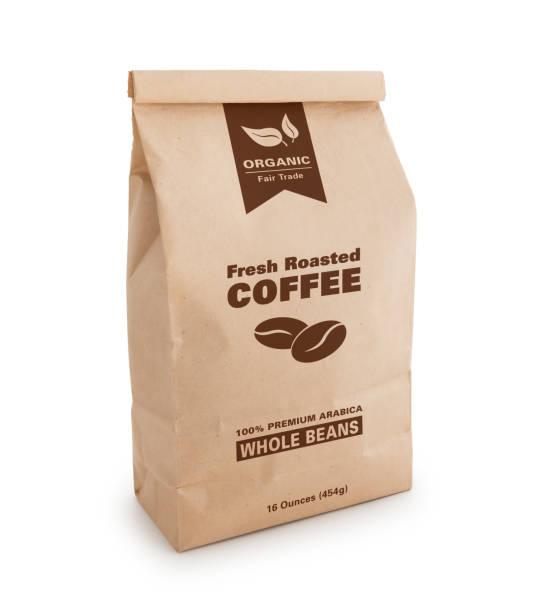
Paper packaging materials play a very important role in the food packaging sector due to their unique advantages. In some developed countries, paper accounts for 40% to 50% of total packaging materials, and my country accounts for approximately 40%. National standards specify requirements for the hygiene indicators, physical and chemical indicators, and microbial indicators of base paper used for food packaging. Pure paper is hygienic, non-toxic, and harmless, and can be biodegraded by microorganisms under natural conditions without polluting the environment. The sources of harmful substances in paper and their impact on food safety primarily lie in the following aspects.
Pollution caused by the raw materials used in paper production itself
The raw materials used to produce food packaging paper include wood pulp, straw pulp, etc., which contain pesticide residues. Some companies use a certain percentage of recycled waste paper to make paper; although the recycled waste paper is bleached, this process only removes the ink pigment, while harmful substances such as lead, cadmium, and polychlorinated biphenyls may still remain in the pulp; other companies use moldy raw materials in production, causing the final product to contain a large amount of mold.
Additives in the paper manufacturing process
Paper production requires the addition of chemicals to the pulp, such as water-repellent agents, sizing agents, fillers, bleaching agents, dyes, etc. Most of the leached substances in paper originate from the additives, dyes, and inorganic pigments in the pulp. Various metals are often used, and these metals can leach even at the mg/kg level and cause diseases [2]. For example, in the paper manufacturing process—particularly when chemical pulping is used—paper and cardboard typically contain certain chemical residues, such as alkali and salts left over from the sulfate pulping process. The Food Safety and Hygiene Act stipulates that fluorescent dyes or fluorescent whitening agents are prohibited for use in food packaging materials because they are carcinogenic [7]. In addition, fungicides or formaldehyde used in the processing of resins can also leach out of paper products.
Contamination caused by ink
My country does not have special inks for food packaging. The inks used to print on paper packaging are usually gravure inks based on organic solvents that contain toluene and xylene. Benzene-containing solvents are often used to dilute the ink, resulting in excessive residual benzene solvents. Benzene-based solvents are not permitted under the GB9685 standard, but they are still used in large quantities; secondly, the pigments and dyes used in inks contain heavy metals (lead, cadmium, mercury, chromium, etc.), aniline or fused-ring compounds, which cause heavy metal contamination, and aniline or fused-ring dyes are clearly carcinogenic. During printing, the layers are stacked on top of one another, causing the unprinted surface to come into contact with the ink, which results in secondary contamination. Therefore, the harmful substances in printing inks for paper packaging have a serious impact on food safety. To ensure the safety of food packaging, the use of benzene-free printing will become a growing trend.
Contamination During Storage and Transportation
During storage and transport, the surface of paper packaging becomes contaminated with dust, dirt, and microorganisms, which jeopardizes food safety.
Metal
Metal packaging materials are among the traditional packaging materials and have been used for food packaging for nearly 200 years. Metal packaging materials are processed into various types of packaging, with metal sheets or foils serving as the raw material for food packaging. Due to their advantages—including high barrier properties, resistance to high and low temperatures, and easy recycling of waste—metal packaging materials are increasingly being used for food packaging. The main drawback of metal as a food packaging material is its poor chemical stability and resistance to acids and alkalis. In particular, it corrodes easily when packaging highly acidic foods, and metal ions readily leach into the food, affecting its taste. The biggest safety concern with iron packaging is that zinc migrates into the food after the galvanized layer comes into contact with it, causing food poisoning. Aluminum materials contain elements such as lead and zinc, and long-term ingestion will cause chronic cumulative poisoning; aluminum has poor corrosion resistance and is prone to chemical reactions that precipitate or generate harmful substances, and it is difficult to control the impurities and harmful metals in recycled aluminum; Stainless steel products contain a large amount of nickel, causing the surface of the packaging to turn black when exposed to high temperatures. At the same time, rapid heat transfer causes unstable substances in food to easily solidify and denature, and they may also produce carcinogens. Stainless steel must not come into contact with ethanol, which can dissolve nickel and cause chronic poisoning in the human body. Therefore, it is generally necessary to apply paint to the inner and outer walls of metal containers. The inner wall coating is an organic coating applied to the inner wall of the metal can, which prevents the contents from coming into direct contact with the metal, prevents electrochemical corrosion, and extends the shelf life of food. However, the chemical contaminants in the coating will also migrate into the contents during the processing and storage of cans, causing contamination. Such substances include BPA (bisphenol-A), BADGE (bisphenol-A diglycidyl ether), NOGE (phenol varnish glycerol ether), and their derivatives. Bisphenol-A epoxy derivatives are endocrine disruptors that enter the body through canned food and can cause hormonal imbalances and genetic mutations.
Glass
Glass is a packaging material with a history dating back centuries. More than 3,000 years ago, the Egyptians first made glass containers, and since then, glass has become a packaging material for food and other items. Glass is a molten product of silicates, metal oxides, and other substances. It is an inert material that is non-toxic and harmless. The main characteristics of glass as a packaging material are: high barrier properties, clarity and transparency, good chemical stability, and ease of forming. Its use accounts for approximately 10% of the total packaging material.
Dissolution of Toxic Substances During Melting
In general, the ions within glass are strongly bound. After being melted at high temperatures, most of them form insoluble salt compounds with excellent chemical inertness, which do not react with the packaged food and provide good packaging safety. However, glass products that have not been properly melted may suffer from the problem of toxic substances leaching from the glass raw materials. Therefore, glass products must be soaked in water or heated with diluted acid. Foods and medicines with strict packaging requirements may require a switch from soda-lime glass to borosilicate glass. At the same time, attention must be paid to the quality of the glass melting and casting processes to ensure the safety of the packaged food.
Excessive levels of heavy metals
High-quality glassware, such as wine glasses with a tall stem, often contains lead compounds, and the amount added typically amounts to as much as 30% of the glass. This is a more significant safety concern with glassware.
Safety Risks of Dyes in Colored Glass
To prevent harmful light from damaging the contents, various dyes are used to color the glass. The greatest safety risk associated with added metal salts is the migration of dissolved substances from the glass. For example, the added lead compounds can migrate into wine or other beverages, and silicon dioxide can also dissolve into them.
Ceramics
Compared to packaging made of metal, plastic, and other materials, ceramic packaging is better at preserving the flavor of food. For example, fermented tofu stored in ceramic containers is of higher quality than that stored in plastic containers, because ceramic containers are airtight and the density between the ceramic molecules is not very high. As a result, air cannot be completely blocked, which promotes the subsequent fermentation of fermented tofu.
The hygiene and safety aspects of ceramic packaging materials used in food packaging primarily concern the leaching of heavy metals, such as lead or cadmium, from the glaze layer on the surface of glazed ceramics. It is generally accepted that ceramic packaging is non-toxic, hygienic, and safe, and will not cause adverse reactions with the packaged food. However, long-term studies have shown that glazes consist primarily of various metal oxides and their salts, such as lead, zinc, cadmium, antimony, barium, copper, chromium, and cobalt, most of which are harmful substances. Ceramics are fired at 1000–1500 °C. At low firing temperatures, the colored glaze does not form insoluble silicates. When ceramic packaging is used, toxic and harmful substances easily leach out and contaminate food. For example, in packaging containing acidic foods (such as vinegar or juice) and wine, these substances easily leach out and migrate into the food, causing safety concerns. Both domestic and international regulations set limit values for the amount of dissolved lead and cadmium in ceramic packaging.
The above is a brief introduction to the safety of food packaging materials and the main materials used. With the development of the national economy, policy adjustments, and changes in consumer attitudes, we have begun to establish a scientific, targeted, and practical food packaging safety control system based on the experience of developed countries; gradually establish and improve new regulations on food packaging materials; and formulate a food packaging quality standard system in line with international standards. As consumers, it is particularly important to raise their awareness of self-protection. A survey on consumers’ trust in the hygiene and safety of food packaging materials shows that people believe glass, ceramics, and metals are safer [9], but these materials also pose safety risks. Consumers lack safety knowledge—for example, they are unable to interpret the information on labels—which affects their acceptance of safety information. .
Trends in Food Packaging Materials
Advocating for Low-Carbon and Environmentally Friendly Packaging
In the food production chain, advocating for environmental protection and low carbon emissions will be the general trend, and the environmental pollution and waste of resources caused by discarded packaging are receiving increasing attention. A consensus has emerged on reducing packaging, making efficient use of resources, minimizing environmental impact, limiting carbon emissions, ensuring safety, and reusing packaging. The experiences with food packaging in Europe and the United States are worth learning from and consulting. For example, Sweden and other countries have already implemented the reuse of polyester PET bottles and PC milk bottles more than twenty times, the Dutch Wellman Company and the American Johnson Company have developed 100% recycled PET packaging, and some paper packaging can be recycled after use. Any consumer material that is not properly processed causes pollution.
Establish a reasonable consumption and usage system to reduce environmental pollution
In the field of packaging materials, polymeric materials are advancing more rapidly than glass, metal, and paper. The main reason for this is that polymers offer excellent performance characteristics.
After my country joins the WTO, due to the reduction in tariffs, the import tax on plastic resins will drop by 60%, and my country’s plastic packaging industry will have greater room for development. According to reports, the annual growth rate of paper containers in the United States over the past five years was 3.2%, the annual growth rate of metal containers was 2.5%, the annual growth rate of glass containers was 0.5%, and the annual growth rate of plastic containers was 5.5%. Food packaging materials need to be evaluated throughout the entire process. From an economic standpoint, the transportation and storage costs of biodegradable materials are relatively high. For consumers, paper packaging costs more than plastic packaging (about twice as much). It is clear that plastic will continue to be the most commonly used and most convenient packaging material for food. Therefore, it is necessary to establish a reasonable consumer usage system to reduce and gradually eliminate its environmental pollution.
Strengthen research and development and safety assessment of functional packaging materials
In the future, food packaging materials will place greater emphasis on functionality, with safety as the guiding principle. Paper-based food packaging materials enhance functions such as moisture resistance, shelf life preservation, sterilization, antiseptic (antioxidant) properties, water resistance, acid resistance, oil resistance, and odor neutralization. Biodegradable packaging materials require more systematic evaluation of their stability, degradability, and cost-effectiveness, including safety assessments under various temperatures, humidity levels, pH levels, oxygen content, oil-containing foods, and microwave conditions. Scientific research departments should therefore conduct more systematic research on food packaging materials and develop products that meet food hygiene requirements and are non-toxic and harmless to humans and the environment.
Accelerate the review and formulation of standards and establish a quality standards system that is in line with international standards.
Currently, some of my country’s food packaging hygiene standards and routine sampling criteria were established in the early 1990s. The existing outdated standards cannot accommodate testing of new materials and are no longer suitable for product safety requirements. Given the current situation of outdated standards, regulatory agencies should refer to advanced international standards to accelerate the revision, improvement, and updating of existing standards. My country lags behind developed countries in safety evaluation and testing technology, which affects our ability to evaluate new substances and materials. Some monomers and additives cannot be detected, and even when they are detected, the sensitivity of the methods is very limited. Therefore, we should strengthen the development of detection and evaluation capabilities at technical support institutions, conduct research on trace detection technology and ultra-trace detection technology for certain monomers and additives, establish methods for detecting multiple types of chemical substances, improve various detection standards, and develop fast and effective detection methods and equipment as soon as possible. At the same time, we should continue to strengthen cooperation with international organizations, such as the Codex Alimentarius Commission (CAC), the World Health Organization (WHO), the Food and Agriculture Organization of the United Nations (FAO), etc., and formulate and improve the safety evaluation procedures, evaluation mechanisms, and management methods for food packaging materials as soon as possible.
Improve the safety assurance system for food packaging materials
Accelerate the implementation of the market access system for packaging material quality and safety, and actively carry out mandatory certification work. For enterprises that have obtained production licenses, post-certification oversight should be strengthened, and a sound long-term safety mechanism should be established. The relatively successful experiences of Europe and the United States are worth learning from, and we should establish a sound food packaging market access system and regulatory measures, such as a food and packaging quality and safety certification system, a food and packaging recall system, and a traceable food and packaging safety database. GMP and HACCP systems are currently recognized worldwide as the most effective and economical food safety systems [14]. My country should implement the mandatory GMP and HACCP certification system in the food packaging materials industry as soon as possible to build a strong safeguard for my country’s food packaging safety.
Strengthen the company's self-discipline and social responsibility
It is very difficult for ordinary consumers to determine whether food packaging poses safety risks. The competent authorities should take appropriate measures to regulate production and ensure the safety of food packaging materials at the source. Legal awareness, self-discipline, and social responsibility on the part of manufacturing companies are directly linked to food safety. As a key component of food processing, the food packaging industry should gradually implement annual inspections, regular inspections, supervision, and spot checks; increase oversight of small and family-run businesses; and penalize illegal operations. In addition, the issues of unclear roles of supervisory departments, duplicate oversight, and loopholes in the law must be addressed to improve management efficiency and encourage companies to produce in accordance with standards and operate in compliance with the law. Food packaging materials not only pose environmental problems but, more importantly, also affect public health and safety. The safety of food packaging materials is synonymous with food safety. Improving the quality and safety of food packaging materials not only ensures food safety but also safeguards consumer health and promotes social stability and harmony.
Conclusion
Food packaging materials are essential, not only for preserving food quality but also for public health and safety. Although materials such as plastic, paper, metal, and glass are widely used, each poses its own risks, such as contamination, migration of toxic substances, and environmental concerns. To address these challenges, it is crucial to continue improving safety standards, conduct thorough research, and establish rigorous testing protocols. Furthermore, promoting environmentally friendly and functional packaging materials, along with strengthening regulations and corporate self-discipline, will be essential for improving the safety of food packaging. By taking these measures, we can protect both consumer health and the future of the food packaging industry.






 English
  Dutch
Dutch