The manufacturing sector is one of the country’s key basic industries and forms the foundation of production. It serves as the backbone of many mechanical manufacturing industries, and its level of development is directly related to the production capacity and precision of the manufacturing sector, which in turn is linked to the level of development of the national machineryindustry and even the entire manufacturing sector. It is the fundamental carrier of advanced manufacturing technology, and the quality, rate of innovation, adaptability to the market, and production efficiency of mechanical products largely depend on its efficiency. Therefore, the manufacturing sector plays a crucial role in a country’s economic development. China is the world’s leading manufacturing nation. According to statistics from the German Engineering Federation (VDW) in 2000, China ranks fifth in the world among major manufacturing countries. However, it still faces relatively low competitiveness in the international market: even in the domestic market, it faces a serious situation: on the one hand, there is high demand for various products in the domestic market, while on the other hand, there is significant domestic stagnation pressure and foreign products are flooding the market.
Classification and Function of Packaging
There are many methods for classifying packaging. Depending on the distribution scope of packaging products, there are industrial product packaging and commercial product packaging. Depending on the structural form of product packaging, there are inner packaging and outer packaging; they can also be classified based on the variety of packaging materials or containers, as well as on the name of the packaged item or product, and so on. It makes sense to classify packaging based on its structural form. Inner packaging is a basic form of packaging structure, which includes direct packaging and intermediate packaging. Primary packaging is a form of packaging in which products are directly packaged or loaded using packaging materials or containers: the packaging material or container comes into direct contact with the packaged item and constitutes the smallest packaging unit. In primary packaging, it is necessary to select packaging materials or containers, develop packaging processes, and packaging machineto select or design packaging materials and equipment based on the physical properties of the packaged items and the packaging requirements. Intermediate packaging is a form of packaging in which a certain number of individually packaged products are combined and then repackaged. Examples include packing items into boxes after bottling or packaging; strip packaging after packing cigarette packs; and packaging toothpaste products after sealing the tube.
With the diversification of consumer needs—particularly the growth of supermarkets—the importance of inner packaging has continued to grow. The demand for the machines and equipment needed to produce inner packaging is highest in the packaging industry. Outer packaging refers to packaging in which a specific quantity of products, after being packaged internally, is placed into boxes. Today, corrugated cardboard boxes are widely used for packaging. The primary purpose of inner packaging is to promote sales and provide consumers with ease of use. When designing packaging, in addition to meeting the material and quantity requirements of the packaged contents, the important role of packaging decoration must also be emphasized. The primary purpose of outer packaging is to ensure distribution, storage, and transportation, which requires strong and sturdy packaging.
Packaging is a protective measure applied to the packaged material, with the primary purpose of preserving the product’s value in use. Therefore, packaging should also take into account the convenience of transportation, loading and unloading, storage, and sales of items in circulation. In addition, the design of packaging also plays a role in enhancing aesthetics, promoting the product, and driving sales. Packaging processing is the final stage of product production and a crucial step that cannot be overlooked in enhancing the commercial value of products.
Trends in Packaging Machine Development
Currently, the countries with high levels of packaging and machinery exports are mainly the United States, Germany, Japan, Italy, and the United Kingdom. Germany’s packaging machinery industry holds a leading position in design, manufacturing, and technical performance. In 2002, the output value of German packaging machinery reached 3.4 billion euros, with 77% of its production consisting of exported products. In recent years, the development of packaging and machinery equipment in these countries has shown new trends.
New Trends in Packaging Machine Design in Germany
Germany, along with the United States, Japan, and Italy, are major players in the world of packaging machinery. We hold a leading position in the areas of design, manufacturing, technical performance, and other aspects of packaging machinery. The design of German packaging machines is based on market research and analysis results, with the goal of providing optimal service to customers, particularly large companies. To meet customer requirements, German manufacturers and packaging machine design departments have taken various measures:
(1) The level of process automation is increasing to improve the productivity and flexibility of the equipment. A robotic arm is used to perform complex movements. During the operation, the robotic arm—controlled by a computer-guided camera that captures and monitors information—performs the prescribed actions according to computer instructions to ensure the quality of the packaging.
(2) Improve production efficiency, reduce production costs, and maximize production output. German packaging machines are renowned for their expertise in beverage and beer filling and packaging equipment. These machines are characterized by high speeds, complete systems, a high degree of automation, and exceptional reliability. The filling speed for beverages reaches up to 120,000 bottles per hour, and the packaging speed of the machine for packaging small bags reaches up to 900 bags per minute.
(3) Integrate the production and packaging machines. Many products require immediate packaging after production to improve production efficiency. The chocolate production and packaging equipment manufactured in Germany is controlled by a single system. The key to integrating the two is solving the problem of coordinating production capacity.
(4) Adapt to changes in production products with good flexibility and adaptability. Due to fierce market competition, the cycle for product updates and replacements is becoming shorter and shorter. If cosmetics production changes every three years—or even every quarter—and production volumes are high, packaging machinery must offer high flexibility and adaptability so that its service life is significantly longer than that of the product itself, thereby meeting economic requirements.
(5) The widespread use of computer-aided design techniques. With the continuous acceleration of new product development, computer simulation design technology is being used on a large scale in the design of German packaging machines, significantly shortening the development and design cycle of packaging machines.
Packaging machines should focus not only on their capacity and efficiency, but also on their cost-effectiveness. This so-called cost-effectiveness encompasses not only the cost of the mechanical equipment itself but, more importantly, the operating costs. In fact, the depreciation of the equipment accounts for only 61 to 81 TP3T of the total costs, with the remainder consisting of operating costs.
Development Status and Trends in Household Packaging Machines
The packaging machinery industry in China began in the 1970s and developed rapidly in the late 1980s and mid-1990s. It has become one of the top 10 sectors within the machinery industry, achieving remarkable results in both output and variety. These achievements have provided strong support for the rapid development of China’s packaging industry.
At present, China has become one of the world’s major industrial producers and consumers of packaging machinery. As a product, the concept of packaging machinery encompasses not only the physical product itself but also three layers of meaning: formal products, invisible products, and extended products. Formal products refer to the specific form and basic functions of the packaging machine itself; invisible products refer to the actual utility provided by packaging machines to users; extended products refer to the quality assurance, usage guidance, and after-sales service associated with packaging machines. Therefore, the design of packaging machines should include: market research, schematic design, structural design, and construction drawings; user manual development; and an after-sales service plan, among other elements.
The main categories of packaging machine design are: research and mapping, conceptual design, development design, improvement design, and production design. The production capacity of a beer filling line ranges from 16,000 to 40,000 bottles per hour, and the number of filling valve positions in the filling machine varies from 48, 60, 90, to 120, which fall under the mass-production design category. The design of the transition from a standard beer filling line to a draft beer filling line falls under the category of improvement and development design. For packaging machines operating at medium to low speeds, we are currently capable of performing independent design work.
High-speed packaging machines, particularly some advanced models, are often studied and replicated from comparable foreign models for domestic and mass-production design. The main reason for this is that: (1) most designers do not truly master advanced design methods, such as the theory of dynamic design and methods for high-speed packaging machines, and are unable to simulate and solve problems such as the dynamic accuracy analysis of mechanisms under high-speed operating conditions; (2) the integration of industry, science, and research is not close enough, and theoretical scientific research results cannot be applied in a timely manner to practical design. Designers lack timely technical training. (3) The entire industry lacks macroeconomic regulation, and limited resources cannot be reasonably allocated and adjusted.
In the field of packaging machinery design, the vast majority of designers still use the traditional design methods: (1) searching for similar models to serve as prototypes based on the design specifications; (2) referring to the prototypes to develop various technical performance indicators and scope of application; (3) designing a working principle diagram and a transmission system diagram; (4) Designing key components and parts; (5) Designing assembly drawing layouts and action cycle diagrams; (6) Designing component drawings, assembly drawings, and part drawings; (7) Performing strength and stiffness checks on key components in the main assembly; (8) Designing control schematics, construction drawings, etc. Today, some design software developed by domestic universities can perform finite element analysis and optimization design on commonly used mechanisms in packaging machines. The CAD/CAM software they have developed for cam-linkage mechanisms already enables enterprises to independently design such mechanisms, but its application in the design of actual packaging machinery is not yet widespread. New packaging machinery is often an integrated system combining mechanical, electrical, and pneumatic components. By fully leveraging the latest advancements in information technology and adopting separation transmission technologies—such as pneumatic actuators and servo motor drives—the transmission chain of the entire machine can be significantly shortened, the structure greatly simplified, and the operational accuracy and speed substantially improved. One of the key technologies is the use of synchronous control technology driven by multiple motors. In fact, mastering this technology is not difficult; it’s just that some designers lack an understanding of the development of packaging machinery. While in the past, packaging machinery design in China was in the stage of imitation and learning, we should now embrace innovative design.
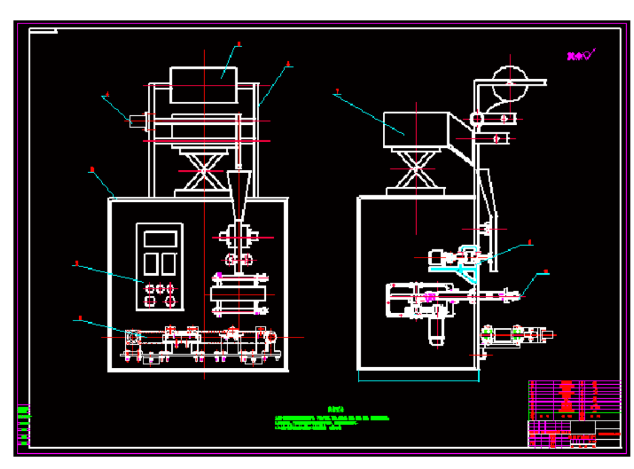
The achievements of technology and machinery in China’s packaging industry in recent years have been remarkable. It began in the late 1970s, with an annual output value of only 70–80 million yuan and just over 100 product varieties. The technical level was also relatively low. It was not until the mid-1980s through the mid-20th century that rapid development was achieved, with an annual growth rate of 20% to 30%. By the end of 1999, there were 40 major categories of packaging machinery and 1,700 varieties. In 2000, the output value increased to 30 billion yuan, and the technological level also reached a higher level. A trend toward larger scale and automation began to emerge, and equipment featuring complex transmission systems and high technological content also began to appear. Many types of packaging machinery, such as liquid filling machines, have begun to be exported as complete sets.







 English
 Dutch