Packaging materials include metal, plastic, glass, ceramics, paper, bamboo, wild mushrooms, natural fibers, chemical fibers, composite materials, and other major packaging materials, as well as strapping, decorative materials, printing materials, and other auxiliary materials. The specific choice of material depends on the product’s market demand, and environmental considerations must also be taken into account.
Innovations in packaging materials include: molded pulp packaging materials designed for thermal insulation, shock resistance, impact resistance, and protection against spoilage;
When designing, try to use as many materials as possible that are difficult to break down later during the packaging stage. Use materials that are lightweight, small in size, easy to crush or flatten, and easy to separate.
Types of Packaging Materials
Paper packaging materials: honeycomb paper for packaging, paper bags, desiccant packaging paper, honeycomb cardboard, industrial kraft cardboard, honeycomb paper core;
Plastic packaging materials: PP tape, PET tape, tear-off film, wrapping film, sealing tape, shrink film, plastic film, hollow sheets;
Composite soft packaging materials: flexible packaging, metallized film, iron core wire, aluminum foil composite film, vacuum-metallized paper, composite film, composite paper, BOPP;
Metal packaging materials: aluminum foil rolls, barrel clamps, steel straps, buckles, aluminum blister packs, PTP aluminum foil, aluminum sheet, steel buckles;
Ceramic packaging materials: ceramic bottles, ceramic cylinders, ceramic pots, ceramic jars;
Glass packaging materials: glass bottles, glass jars, glass boxes;
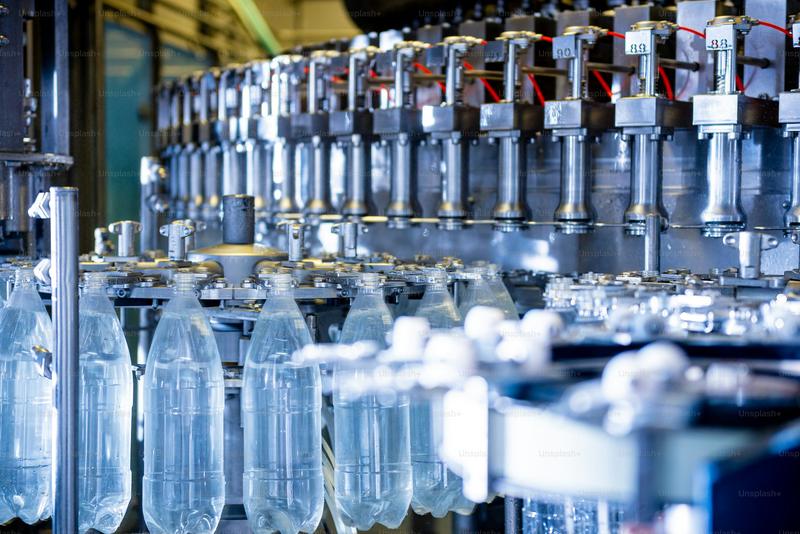
Wooden packaging materials: packaging made from wood products and engineered wood panels (such as plywood and fiberboard), including wooden crates, wooden barrels, wooden boxes, plywood and fiberboard boxes, plywood crates, and wooden pallets, etc.;
Other packaging materials/excipients:
Materials for hot stamps: hot-stamping materials, laser foil, electrochemical aluminum hot-stamping paper, hot-stamping foil, hot-stamping foil, hot-stamping foil, colored foil;
Adhesives, coatings: adhesives, composite adhesives, adhesive enhancers, starch-based adhesives, sealing adhesives, latex, resins, self-adhesive materials;
Packaging Supplies: machine for manufacturing cap gloves, mold, gasket, handle, nozzle, cap, packaging film.
Box packaging for cosmetic products
Boxes refer to folding boxes or corrugated cardboard boxes, made from two materials: cardboard and corrugated cardboard. The materials used in packaging boxes can be divided into two categories: face paper and corrugated paper. Commonly used paper types for packaging boxes include gray copper, single-sided copper, white copper, premium cardboard, silver cardboard, gold cardboard, platinum cardboard, laser cardboard, etc.
“White background white board” refers to: white copper and single copper. The common feature of white copper and single copper is that both sides are white. The difference is: “white copper” is smooth on one side and rough on the other. In layman’s terms, the front side can be printed on, but the back side cannot; “single copper” has coated surfaces on both sides, and both sides can be printed on. “Gray background gray board” is a type of paper, but it is not used for packaging boxes; “gray background white board” is what is known as “gray copper paper,” meaning the front side is white and printable, while the back side is gray and not printable. Generally, white card is also referred to as “white background white board” paper, which is the standard term used in general quotations (except for special white cards, such as platinum and silver cards).

White cardboard, black cardboard
White cardboard has a wide range of applications and is widely used in cosmetic, pharmaceutical, cigarette, wine, and food packaging. White cardboard is generally characterized by its sturdiness and thickness, high whiteness, a smooth surface without imperfections, ease of printing, good ink absorption, and a high gloss. We usually choose this paper as our first option when printing cosmetic bags. The reasons for choosing this paper are: first, the paper does not lose ink quickly during printing; second, this type of paper has good toughness, high fold resistance, and does not tear easily. Third, the paper has a high density. In addition to these advantages, white and black cardboard are suitable for various surface treatments. Common production processes include lamination, varnishing, hot gold/hot silver, hot blue, red, green gold, convex, UV, embossing, etc. In the production of mask boxes, white cardboard can also be die-cut into various desired box shapes to achieve the packaging effect requested by customers.
Gold cardstock, silver cardstock, laser-printed gold cardstock, and gold cardstock in various colors
Gold and silver cardboard is often used for packaging masks, and there are many options for the inner packaging of cosmetics, outer packaging, and packaging for daily toiletries. Think, for example, of packaging for toothpaste, health products, medications, and gift sets. The most important characteristic of gold and silver cardboard is that it looks more elegant, refined, and stylish. Gold and silver cardboard is a special type of paper. It is made by laminating a layer of gold- and silver-colored aluminum foil onto white cardboard. Printing on gold-printed cardboard is slightly more complex due to the material. Quick-drying printing ink is required during the printing process, and because the surface of gold and silver cardboard scratches easily, lamination protection is required in the subsequent process. After lamination, surface embossing, debossing, hot stamping, UV coating, and other processes are applied. When using gold and silver cardstock, production costs will be slightly higher than with regular white cardstock. However, to boost sales and enhance the product’s aesthetics, using gold and silver cardstock—or choosing other colors of gold cardstock—may be a viable option!
Kraft paper and specialty paper
The advantages of kraft paper are its strength, tear resistance, and good water resistance, but its surface is loose and slightly rough. Most printing is done in black only. If the surface requires four-color or spot-color printing, the print quality may be slightly inferior to that of other paper types because the paper itself has a yellowish tint. If hot stamping and UV printing are performed during post-processing without lamination, the hot-stamped area may be incomplete or impossible to hot stamp, because the paper’s surface is not smooth and delicate. Surface treatment after lamination yields better results.
Cosmetic boxes from well-known international brands often use specialty paper. Specialty paper includes embossed paper with various surface textures, shimmering pearlescent paper in different colors, glossy paper, colored corrugated cardboard, and so on. Cosmetic boxes or packaging boxes made from specialty paper are of very high quality. They can be printed in full color and directly finished with hot stamping, embossing, and other techniques during post-production.
The standard packaging box for masks or cosmetics is usually made of white cardboard and gold- and silver-colored cardboard, with a paper weight of either 350 g or 400 g. The box structure is typically a plug-in box. Depending on the total weight of the mask and the weight of the skincare product, the bottom can be reinforced. The bottom can be designed as a box with a hook-bottom (adhesive on the bottom to increase load-bearing capacity) or an automatic-bottom box. In terms of packaging technology, white cardboard can be finished with hot stamping, UV printing, embossing, and concave and convex effects after lamination. Art paper can be screen-printed and hot-stamped directly. Gold-colored cardboard can be hot-stamped, UV-printed, embossed, and given concave and convex finishes after lamination.
Manufacturing Method and Process for Cosmetic Packaging Boxes
Cosmetic packaging can be divided into mid-range and high-end packaging. The manufacturing methods and processes for cosmetic packaging must be inextricably linked to various common processes. To achieve higher quality, high-end cosmetic packaging typically incorporates post-production processes or various box structures to enhance the overall visual appeal and quality of the packaging and play a supporting role in boosting sales. No matter how things change, they remain essentially the same. Every piece of cosmetic packaging, other product packaging, or gift packaging must go through the following processes before it can be produced. What are their production procedures, methods, and processes?
The first and most important step in cosmetic packaging is printing. The printing manufacturer uses offset printing (commonly known as color printing). Color printing involves producing the desired color effect by mixing the four primary colors—magenta, yellow, cyan, and black inks. Special gold, special silver, special red, etc., fall under the special color printing method. In addition to standard offset printing, the printing method must be adjusted based on the specific characteristics of the printing material. For example, various types of gold cardboard use UV printing. The more special colors included in the design files provided by customers, the higher the printing cost will be. When printing cosmetic color boxes, printing gold and silver is also a technique used to enhance the box’s premium appearance. Before printing, the following steps must be completed. First, select or design the box structure for the paper packaging box. If customers provide samples, the box can be produced according to those samples. Why design the box structure first? Because the paper box production process includes a die-cutting step, which ensures the box structure is standardized. Before creating the artwork, you can design it based on the predefined die lines. After designing and confirming the file, you must first create the printing plates. Four-color printing requires four screens, and each spot color requires a separate spot color plate. The more spot colors used, the more plates are needed.
Process
After printing, a surface treatment is required. The most immediate effect of lamination and varnishing is to protect the printed surface from scratches. These are common production and finishing processes. For example, in the production of colored boxes, when gray cardboard is printed in a dark color, the entire surface will feel dull and worn if it is not varnished, whereas after varnishing, the printed surface will enhance the overall gloss, giving people a completely new visual experience. However, cosmetic packaging is rarely varnished. Other processes such as lamination, hot stamping, hot silver, UV coating, convex and concave printing, embossing, etc., are used to enhance the quality and exquisite appearance of the packaging products.
Die-cutting
Die-cutting is a necessary process before boxes are glued together. The box structure selected prior to the design phase is converted into a die. During die-cutting, the die plate is placed on the die-cutting machine. After the professional die-cutting operator has aligned the position and angles, the box is die-cut into a flat-folded shape that matches the shape of the die plate. The deviation from the die-cutting dimensions is approximately 1 mm, which falls within normal tolerances.
Stick-on pockets
The excess edges and corners are removed from the printed surface after die-cutting. The next step is to assemble the box. When assembling the box, it is essential to carefully align the lines. If there are high and low lines (where the top and bottom lines are not aligned) or lines that extend beyond the specified position (where the glue line crosses the glue position line), these are all defective products. Manufacturers conduct random inspections of products during the box-gluing process. Approved products can be packaged and shipped to customers for use.
Given the above, when we need to customize cosmetic packaging boxes, we first select the most commonly used paper types, such as: bright white cardboard, various gold-coated papers, silver-coated papers, or laser-coated cardboard, and specialty papers with different embossed textures, such as cowhide-textured cardboard. The standard weight used is generally 350 grams. Next, we select the finishing process. The most common production methods are: white cardboard is coated with matte foil and then gold/silver/laser effects are applied to the surface, combined with embossing technology to emboss the logo or other patterns. Gold-coated cardboard must be coated before the surface undergoes UV treatment. Standard art paper can be UV-coated directly or coated and then hot-stamped, or other processes with different requirements may be used. The specific production procedures can be customized to meet the customer’s needs. The box types typically use a plug-in box design. Boxes with a lock-bottom and a hook-bottom are also common. Fold-out boxes can be used for gift packaging or as a complete set of cosmetic packaging. They are recommended for transporting lightweight cosmetics.
Automatic Packaging Machine for Cosmetics
Automatic packaging machines They are crucial in the cosmetics industry because they streamline production processes and increase efficiency. These machines are designed to perform various packaging tasks, from filling to sealing, labeling, and even packaging. They ensure consistency, speed, and precision, which are essential for large-scale production. Below are some types of automatic packaging machines used in the cosmetics industry:
1. Filling Machines
Filling machines are designed to accurately fill containers with cosmetic products such as creams, lotions, shampoos, or serums. These machines can:
- Volumetric fillers: Used for liquids and semi-viscous products.
- Piston Fillers: Ideal for more viscous products, such as creams and gels.
- Pump Fillers: Suitable for liquids with low to medium viscosity.
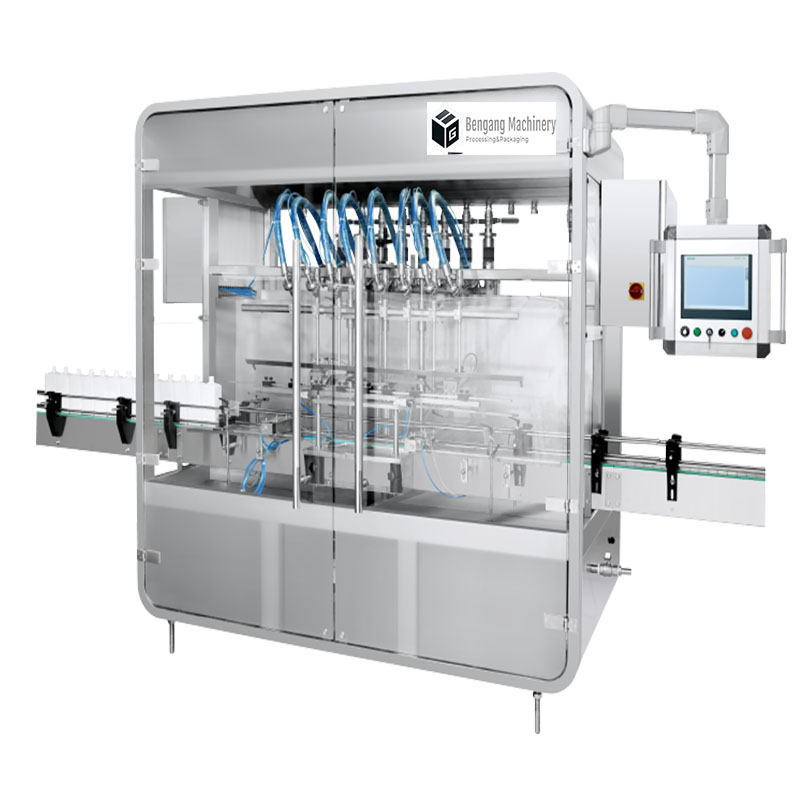
2. Sealing Machines
Sealing machines ensure that the container of a cosmetic product is tightly sealed, preventing leakage and contamination. Common types of sealing machines include:
- Heat-sealing machines: Used to seal plastic packaging, usually in small bags or larger bags.
- Cap-Sealing Machines: Automatically screw or press caps onto bottles or jars to ensure a tight seal.
3. Labeling Machines
Labeling machines are essential for applying labels to cosmetic packaging. They can handle a wide range of labeling tasks, from applying labels to bottles, jars, and tubes to applying high-quality images and barcodes. There are several types of labeling machines:
- Wrap-around Labeling Machines: For bottles and cylindrical products.
- Top and Bottom Labeling Machines: Used for rectangular packaging, such as boxes or jars.
- Custom Labeling:The machines can also handle special label designs, ensuring that brand logos are prominently displayed.
4. Cartoning Machines
Carton packing machines are designed to place cosmetic products into cardboard boxes. They can be customized to handle products such as skincare bottles, makeup kits, and perfume boxes. These machines efficiently fold, seal, and glue cardboard boxes. They can be integrated with other packaging lines for seamless production.
5. Shrink Wrap Machines
Shrink-wrapping machines are widely used in the cosmetics industry to package sets containing multiple products or to ensure a sealed package. The product is placed inside a shrink-wrap sleeve, which is then heated until it fits snugly around the product.
6. Palletizing Machines
Once products have been packaged, they are ready for shipment. Palletizing machines automate the stacking of boxes onto pallets, which improves efficiency and reduces the risk of injury from manual handling. These machines are ideal for high-volume cosmetics production.
Benefits of Automatic Packaging Machines for Cosmetics:
- Efficiency:Automated machines operate faster and more consistently, resulting in higher throughput in packaging processes.
- Accuracy:These machines ensure that every step in the process—such as filling, sealing, and labeling—is carried out with precision.
- Cost-effectiveAlthough the initial investment in automated machines can be high, the reduction in labor costs and the increase in productivity ensure that they are cost-effective in the long run.
- Custom SolutionsModern packaging machines can be customized to meet specific needs, such as packaging cosmetic products of various sizes, shapes, and types.
- Hygiene:Automated systems minimize human contact with products, help maintain a high level of hygiene, and reduce the risk of contamination.
Conclusion
Cosmetic Packaging plays a crucial role in enhancing aesthetic appeal, protecting the product, and ensuring the safety and quality of cosmetics. As demand for innovative, sustainable, and efficient packaging continues to grow, brands must stay ahead of the curve by selecting the right materials and packaging technologies.
By choosing the right packaging materials, such as white cardboard, gold or silver cardboard, and specialty paper—combined with finishing techniques such as hot stamping, UV coating, and embossing—brands can create high-quality, visually appealing packaging that stands out on the shelves. Furthermore, the integration ofautomatic packaging machines helps streamline production processes and ensures speed, precision, and cost efficiency.
In an industry driven by consumer preferences, sustainability, and creativity, understanding the full scope of cosmetic packaging materials, processes, and automated machinery is essential to building a successful brand. By striking the right balance between materials, design, and automation, cosmetics brands can not only protect their products and present them attractively, but also meet the growing expectations of environmentally conscious consumers.



 English
  Dutch
Dutch